
For many British homeowners, uneven or sloping terrain can feel like an insurmountable obstacle when planning garden improvements. Traditional fencing solutions, such as pre-made panels, often falter on challenging ground, leaving unsightly gaps, unstable sections, or a disjointed appearance that clashes with the natural landscape. Enter bespoke closeboard fencing—a tailored approach that transforms uneven ground from a problem into an opportunity. At Smartbuild, we pride ourselves on crafting fencing solutions that not only adapt to your garden’s unique contours but elevate its beauty and functionality. In this deep dive, we explore how bespoke closeboard fencing turns slopes, hollows, and undulating terrain into seamless, secure, and stylish outdoor spaces.
1. The On-Site Advantage: Precision Crafting for Every Curve and Slope
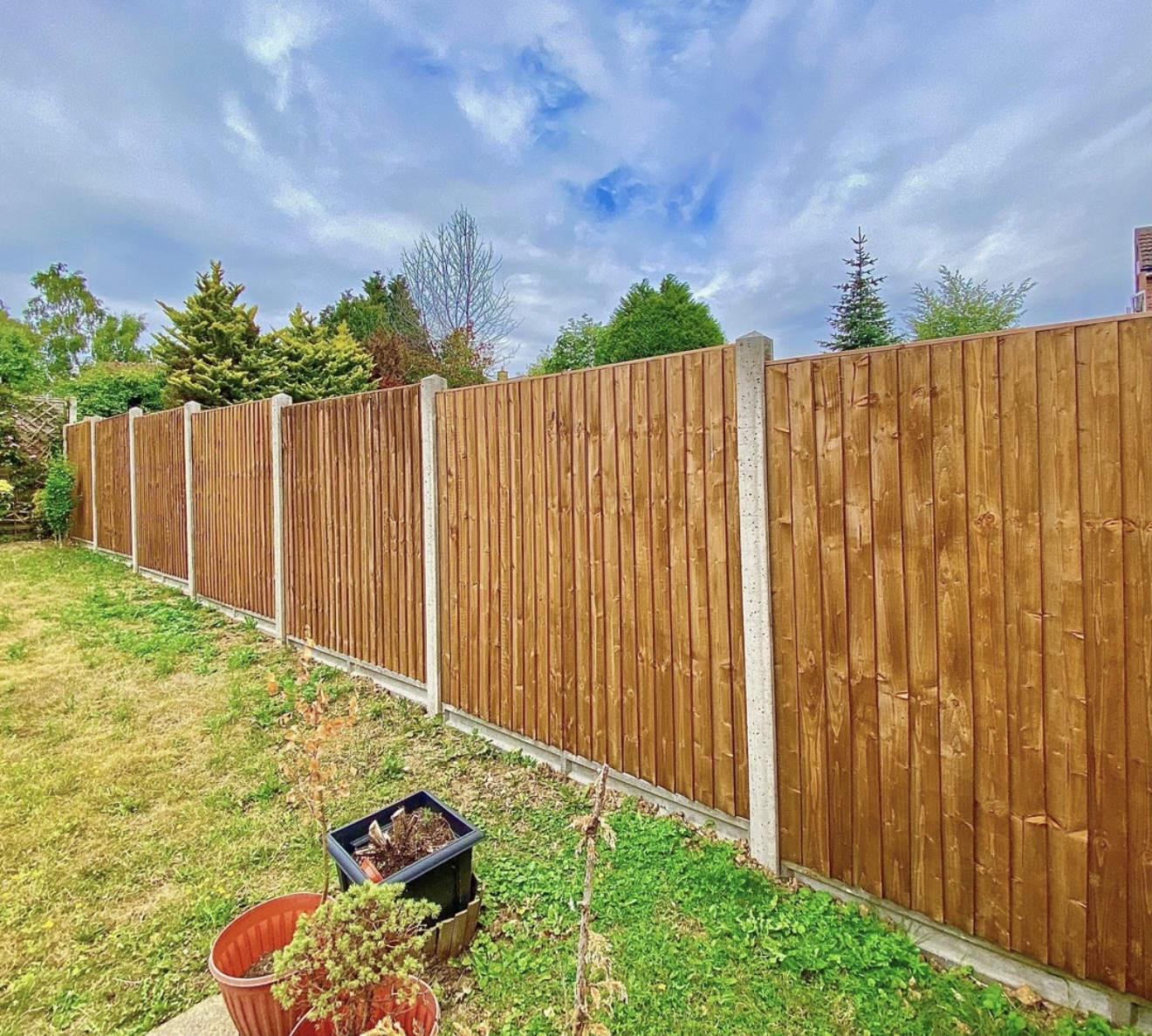
The defining feature of bespoke closeboard fencing lies in its on-site construction, a process that prioritises adaptability over rigidity. Unlike pre-made panels, which force the land to conform to their fixed dimensions, bespoke fencing is built piece-by-piece, directly on your property. This method allows our craftsmen to meticulously follow the natural contours of your garden, whether it features a gentle gradient, a steep incline, or irregular dips.
Imagine a garden where the ground rises sharply near a patio before sloping downward into a shaded grove. Pre-made panels would struggle here, creating awkward angles or leaving gaps beneath the fence. Bespoke closeboard fencing, however, is assembled to mirror these changes in elevation. Each vertical feather-edge board is individually positioned, and horizontal rails are adjusted to ensure the structure hugs the terrain perfectly. The result is a fence that looks as though it grew organically from the landscape itself, with no jarring transitions or compromised stability.
2. Stepped vs. Raked: Choosing the Right Technique for Your Slope
When dealing with sloping ground, bespoke closeboard fencing offers two distinct installation methods, each with its own aesthetic and functional merits.
Stepped Installation: Structured Elegance for Formal Gardens
In this approach, the fence is constructed as a series of horizontal sections, each “stepping” down to follow the slope. Picture a terraced hillside, where each level descends in a clean, geometric fashion. Stepped fencing excels in formal gardens or contemporary settings where symmetry and order are paramount. While the visible steps between sections may not blend seamlessly into rustic landscapes, they provide a deliberate design feature that complements modern architecture.
Raked Installation: A Fluid, Natural Aesthetic
For gardens that prioritise harmony with nature, the raked method is often preferred. Here, the entire fence is angled to follow the slope continuously, creating a smooth, uninterrupted line that flows with the land. This technique is ideal for rural or cottage-style gardens, where the fence must appear as a natural extension of the environment. Though raked fencing requires more precise craftsmanship—angled posts and rails demand careful calculation—the payoff is a graceful, cohesive structure that enhances the garden’s organic appeal.
At Smartbuild, we assess factors such as slope gradient, soil type, and your design preferences to recommend the optimal technique.
3. Adjustable Posts: Stability Meets Aesthetic Consistency
One of the most common pitfalls of fencing on uneven ground is inconsistent post heights, which can lead to a wobbly, unprofessional finish. Bespoke closeboard fencing eliminates this issue through custom-cut posts tailored to each section of your garden. For instance, a post positioned at the crest of a slope may be shorter to accommodate higher ground, while a post in a dip is lengthened to maintain a uniform top line.
This meticulous adjustment ensures two critical outcomes:
- Structural Integrity: Each post is anchored securely, regardless of ground level variations, preventing leaning or warping over time.
- Visual Cohesion: Despite the terrain’s irregularities, the fence’s upper edge remains perfectly level, preserving a polished, intentional appearance.
Consider a garden with a natural spring that has eroded parts of the soil, creating uneven patches. Standard fencing might sag or tilt here, but bespoke closeboard fencing’s adjustable posts compensate for these inconsistencies, delivering both strength and elegance.
4. Gravel Boards: The Unsung Heroes of Uneven Terrain
Beneath the sleek feather-edge boards of a closeboard fence lies a humble yet vital component: the gravel board. These horizontal timber panels run along the base of the fence, serving multiple roles in managing uneven ground:
- Bridging Gaps: In areas where the ground dips, gravel boards fill the space between the soil and the fence, eliminating unsightly voids that could allow pests or debris to enter.
- Moisture Protection: By elevating the main fence panels above ground level, gravel boards reduce contact with damp soil, a key defence against rot in the UK’s rainy climate.
- Custom Fit: For particularly dramatic slopes, tapered gravel boards can be crafted to follow the angle of the land, ensuring a snug fit without compromising durability.
In a coastal garden where salt-laden winds and shifting sands challenge traditional fencing, gravel boards act as a sacrificial layer. They absorb the brunt of environmental wear, extending the lifespan of the entire structure.
5. Beyond Functionality: Custom Designs That Elevate Your Garden
Bespoke closeboard fencing is not merely a practical solution—it’s a canvas for creativity. Whether your garden is a minimalist urban retreat or a wildflower-strewn haven, the fencing can be tailored to reflect your vision.
- Height Variations: In a sunken seating area, taller panels might be installed to enhance privacy, while lower sections could frame a raised herb bed or pond.
- Colour and Finish: Stain the timber in rich cedar tones for a traditional look, or opt for muted grey to complement a modern aesthetic. Paintable options allow you to match existing garden structures or outdoor furniture.
- Decorative Flourishes: Add chamfered tops for a subtle refinement, or incorporate trellis extensions to support climbing roses or ivy, blending security with natural beauty.
Imagine a sloping garden in the Cotswolds, where a bespoke closeboard fence curves gracefully around an ancient oak tree. The fence’s custom height and raked installation follow the land’s natural fall, while a trellis topping bursts with fragrant jasmine. Here, the fence transcends its role as a boundary, becoming an integral part of the garden’s charm.
6. The Long-Term Value of Bespoke Solutions
While the initial investment in bespoke closeboard fencing may exceed that of pre-made panels, the long-term benefits are undeniable.
- Durability: Precision installation and premium materials reduce the risk of warping or sagging, even on unstable ground.
- Low Maintenance: Pressure-treated timber and protective gravel boards minimise upkeep, saving time and money over decades.
- Enhanced Property Value: A well-crafted, aesthetically pleasing fence boosts curb appeal and can increase resale value, particularly in competitive UK housing markets.
Conclusion
Uneven ground need not be a barrier to achieving the garden of your dreams. Bespoke closeboard fencing turns slopes, hollows, and irregular terrain into features that enhance your outdoor space’s beauty and functionality. By combining on-site craftsmanship, adaptable techniques, and a commitment to quality, this fencing solution delivers unmatched results where off-the-shelf options fall short.
Contact Smartbuild today for a personalised consultation. Let our experts design and install a bespoke closeboard fence that harmonises with your landscape, proving that even the most challenging ground can become a testament to thoughtful design.
Try our new Fencing Calculator to get a real time cost estimate for materials and labour